
16 August 2024
What a difference a year makes. Last year at the Women’s World Cup in Australia and New Zealand, the Matildas, Australia’s national women’s football team, became the toast of the nation during their run to the semi finals. A year later, at the Paris 2024 Olympics, they were bundled out in the first round in one of the most embarrassing displays ever witnessed by an Australian national football team. The Matildas could not even achieve the low standard of being two of the best third placed teams out of the three groups, even with Canada docked 6 points in one of the other groups. It was also their earliest elimination since Sydney 2000.

After a 3-0 loss in the opening game to Germany, Australia inexplicable were 5-2 behind against Zambia, and only sneaking the win 6-5 thanks to an own goal, a shocking goalkeeping error, and a sloppy penalty conceded. Winning that game was a moment of relief, not of rejoice, yet they celebrated like it was a great success. The final game, which Australia were required to win, finished in a 2-1 loss to the USA. That was a flattering result, with the Americans dominant and Australia only grabbing a goal near the end to make it interesting.
The theme of all these losses was terrible defending. It was well known that Australia had trouble defending set pieces, so to see Germany score their first two goals from corners was galling. It’s like they learnt nothing. Coach, Tony Gustavsson, publicly stated it was an area that needed work heading into the Olympics, yet when the moment came, Germany had zero difficulties finding a free player and scoring. The USA’s first goal against Australia also came from a corner.
In hindsight, perhaps the 2023 World Cup was flattering. After a scrappy 1-0 win over Ireland, Australia lost 3-2 to Nigeria before defeating Canada 4-0. That match was probably Australia’s best performance under Gustavsson, and about the only time they beat a quality opponent (Canada were the Olympic champions from 2021 in Tokyo). Australia then beat Denmark 2-0 in the round of 16. In the quarter finals, it took a penalty shootout to beat France following a 0-0 final score, and then England and Sweden outclassed Australia 3-1 and 2-0, respectively, in the semi final and the third placed game.
The Matildas’ woes actually started way earlier than in 2023. In January of 2019, just 5 months before the World Cup in France, Alen Stajcic was sacked as coach of the Matildas by Football Federation Australia for supposedly overseeing a poor playing environment. This followed a “Matildas Wellbeing Audit”, which was always dubious, as it seemed an orchestrated affair in response to a few players complaining about a “culture of fear”. Apparently, a quarter of them responded that they felt psychological distress and many were afraid to ask for support.
Despite the supposed problems under Alen Stajcic, that era saw the Matildas at their best when they won the Tournament of Nations in 2017 held in the United States, beating USA, Japan and thrashing Brazil 6-1 along the way. They followed that in the 2018 tournament with wins over Brazil and Japan and a draw against the USA to finish second to the Americans on goal difference.
Ante Milicic replaced Stajcic for the 2019 World Cup held in June and July, where Australia were defensively abhorrent. Following 5-2 and 3-0 losses to the USA and Netherlands, respectively, in warm up games, Australia lost 2-1 to a dominant Italy in the first World Cup game. Australia then went two goals down to Brazil before winning 3-2. Poor goalkeeping by Jamaica contributed to Australia winning 4-1 in the final game. Australia were then bundled out on penalties in the round of 16 by Norway following a 1-1 draw.
Curiously, this was the not first time an uprising by the Matildas caused the removal of a coach. In 2014, a player mutiny against Hesterine de Reus saw her sacked by the FFA. Apparently, she was too tough on the players. Fast forward to the Gustavsson era, we had a coach that seemed to pamper, mollycoddle and let the players run the show rather than force his imprint on the team. Following the Olympics exit, some players labelled his era as “disorganised chaos”. That really shows he lacked sufficient control and authority within the team. A notorious trait of his was constantly being boastful about the team, which is a sign of hiding weaknesses and trying to avoid scrutiny.
Former Matildas coach Tom Sermanni responded about the post-Olympics whinging and said it’s easy to find upset or unhappy players. That seems a pattern now, with a core group of players actually running the team. When it gets too tough, a few of them initiate a revolt. Gustavsson just let them have it rather than fight it. With a bunch of spoiled brats, a team led by a con man not a coach, and a team operating on the moronic “Til it’s done” motto as though a major championship will just automatically happen, the whole campaign reeked of distraction, entitlement and laziness. The end result was no surprise in that context.
Australia’s Paris 2024 Medal Results
18 Gold, 19 Silver, 16 Bronze
It does make you wonder why even bother spending so much on team sports for only one set of medals on offer when swimming has a dozen opportunities within a week. Football is a bit different in that it’s already a mainstream sport and highly popular. Something like hockey, where Australia has performed abysmally for the past four Olympics, and it’s a sport with niche appeal, seems a waste of time.
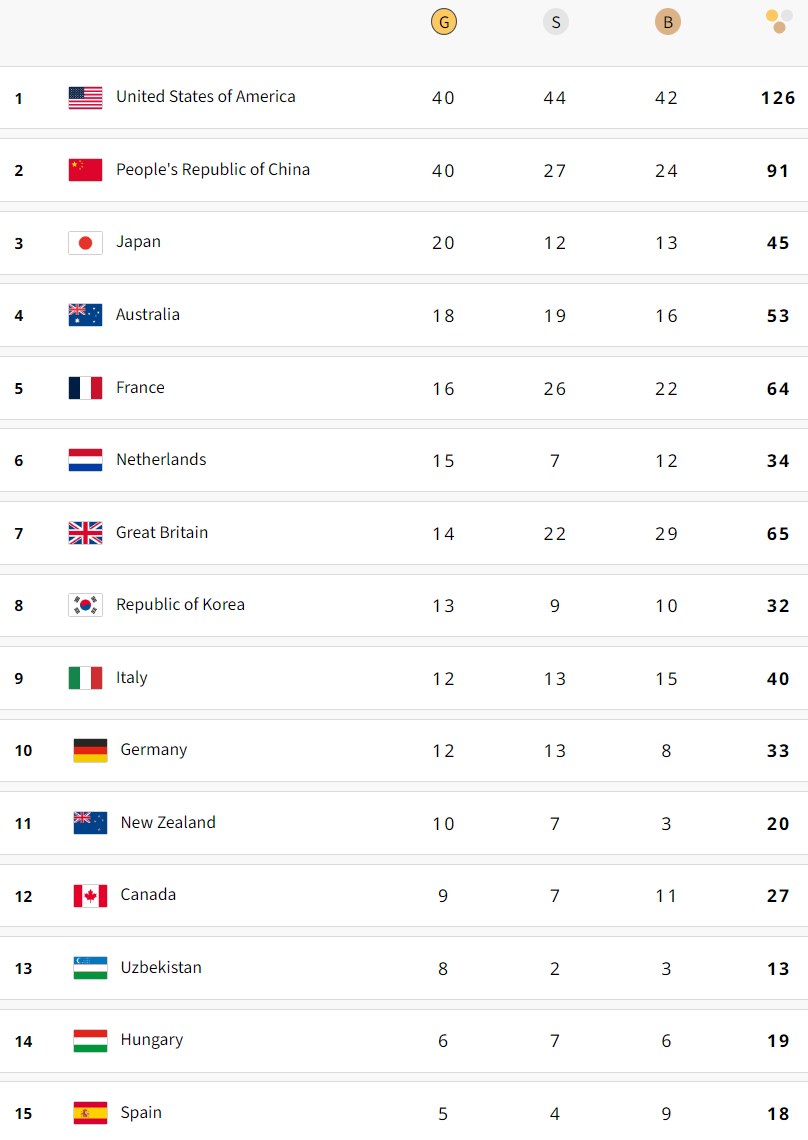
Australia’s haul of 18 gold, 19 silver and 16 bronze medals, for a total of 53 medals, was an outstanding result, and the second highest total behind the 58 won in Sydney (16 gold, 25 silver, 17 bronze). While there are more sports and events than ever (no skateboarding or BMX in Sydney and Australia won 13 gold from 151 events in Melbourne in 1956 vs 18 from 329 in Paris), the competition is overall tougher. The early onslaught of gold in Paris was particularly stunning, while the hopes to reach 20 gold slipped away with a rush of silver towards the end.
After just 7 days, Australia had 11 gold, 6 silver and 5 bronze, so 22 medals within a week, and half of them gold. For the next 9 days it was 7 gold, 12 silver and 14 bronze. This reflects more that Australia’s most dominant sport, swimming, was held in the first week, while the canoe slalom was also scheduled early where 2 gold medals were quickly won thanks to Jessica Fox. Swimming contributed 7 gold, with the women’s road cycling time trial on the first day delivering gold and women’s BMX racing the 11th gold.
The remaining 7 gold medals came from canoe slalom (women’s kayak cross), tennis (men’s doubles), 2 in skateboarding (men’s and women’s park), sailing (men’s dinghy), track cycling (men’s team pursuit) and athletics (women’s pole vault). The last day that Australia won gold medals were the four on 7 August 2024, or the Wednesday of week 2, and then no more came over the final four days of the Games. Those four gold were the sailing, men’s skateboarding and the track cycling, with the pole vault the very final gold medal won. Note, that sailing gold would have arrived a day earlier if not for weather delays, so it was more a coincidence that Australia won four golds that day. Matt Wearn’s lead was actually so large that the final race was mostly a formality (he won it anyway). It was also the fourth straight Olympics that Australia won the men’s dinghy in sailing, with Wearn repeating his effort from Tokyo.
It must be mentioned that most of these medals, and specifically the overall haul, was not a surprise. Australia spends a lot of money on Olympic athletes and sent the third largest team behind USA and the hosts, France. The aim is to finish top 5 at every Olympics. Australia finished fourth, just squeaked out of third on the final day by Japan when they won two golds in wrestling. As the previous hosts, Japan is no doubt feeling the legacy effect of the money invested in sport for their home Games, and finished with an excellent haul of 20 gold (including 8 in wrestling), 12 silver and 13 bronze for 45 total.
Could Australia have done even better?
Australia actually missed several excellent chances for gold. Gracenote, the data company that analyses form leading into the Olympics, predicted Australia would win 54 medals – just one more than the actual. Their breakdown was 15 gold, 23 silver and 16 bronze. Most interesting of all, they predicted 10 gold in swimming, not the eventual 7. The missed predictions were the men’s 200m breaststroke, women’s medley relay and probably the women’s 100m freestyle. French superstar Leon Marchand, who won four events, easily beat Zac Stubblety-Cook into silver in the breaststroke. USA won the relay in world record time. The 10th event is not mentioned and I presume it’s the women’s 100m freestyle given the strength of Mollie O’Callaghan. Sweden’s Sarah Sjöström surprisingly won gold after initially deciding not to race it, while O’Callaghan could only finish fourth. Had she swum her personal best, should would have won. The other option could have been the men’s 400m freestyle in which Elijah Winnington was beaten into silver in a fairly close race. Sjöström would win her pet event, the 50m freestyle too.
Given the 9 swimming gold medals won at Tokyo 2020 (held in 2021) and the bravado coming into Paris to beat the USA, Australia would have hoped to win at least 9. The final total was 7 gold, 8 silver and 3 bronze. In hindsight, the women’s medley relay was an improbable chance, so would have expected the women’s 100m freestyle and one of the other two to come through. Countering that, Australia winning the 50m freestyle thanks to Cameron McEvoy was the trickiest of the predicted golds by Gracenote, and it was a gold that was highly hoped more than expected.
With two more gold medals, Australia would have won 20 gold total for the Games, finished third overall, and beaten the USA by 1 gold to win the swim meet itself. They’ve only done that once before: at the Melbourne 1956 Olympics (8 golds to 2 from 13 swimming events), where they also finished third overall with 13 gold. Curiously, France’s Leon Marchand won 4 by himself in Paris and Canada’s Summer McIntosh won 3. McIntosh actually beat 3 Americans into silver so Australia can thank her for getting so close to the USA. Interesting that Australia does not produce such superstar swimmers like Marchand and McIntosh capable of winning more than 2 gold medals, relying more on specialists and team depth. Shane Gould is the only swimmer, and any athlete, to win three individual events at a single Olympics, when she won the women’s 200m and 400m freestyle, and the 200m medley, at the 1972 Munich Olympics. She also took silver in the 800m freestyle and bronze in the 100m freestyle.
The other tricky golds won were women’s BMX racing, women’s kayak cross, men’s doubles tennis, women’s skateboarding park and women’s pole vault. All were good chances, if not strong chances; it’s just that things can go wrong. Then there are the misses: zero from rowing (always expect one or two gold; only won one bronze), track cycling (could have won one more with luck), kayak sprint (lost men’s K2 500m by 0.04 seconds) and men’s BMX freestyle (defending champion fell in all three rounds after qualifying in third). Australia were also close to winning the men’s windsurfing, men’s surfing (unlucky with waves), women’s water polo and individual eventing in equestrian, with all of them winning silver instead. Jessica Hull was unlucky to be beaten by a legend in the women’s 1500m athletics. Kenya’s Faith Kipyegon won the event for the third straight Olympics. Women’s hockey were expected to challenge for gold, and choked at the quarter final stage yet again. They’ve been a disaster since their win in 2000. Women’s rugby sevens also had a shocker, missing a medal entirely.
Balancing the gold medals that were a bit tricky versus the plethora of other chances not converted, Australia really should have won 20 gold medals at these Olympics. We’ll take 18 and still call it a wild result, even if, on examination, it was optimal.
Minor Medals
Silver and Bronze can be a monumental achievement, like men’s basketball finally winning a medal at Tokyo 2020 with bronze. For Paris 2024, it’s hard to go past the silver Jessica Hull won in the women’s 1500m on the track as the best minor medal. She was in a purple patch of form, having recently broken the 2000m world record (even if it’s a rarely contested race), and raced every round perfectly. While silver will never be as good as gold (had she won gold, our response to her run would be stratospheric!), her achievement is undeniably stellar. Australians just don’t win medals in middle distance races, and we need to go back to the 1950s and 1960s and the likes of John Landy, Herb Elliot, Brenda Jones and Ralph Doubell for middle distance medals.
Raygun
Yes, Rachel Gunn in the breaking (break dancing) was a joke and a complete embarrassment. Her appearance speaks more about the selection process and the drive to get the sport into the Olympics before it was ready. The World DanceSport Federation, who have tried to get ballroom dancing into the Games over the years, only became the official governing body of breaking in 2018. They really had little knowledge of it, and farmed out the qualifying process to regional organisations (AUSBreaking for Oceania). The judging panel was comprised of nine independent international judges as selected by WDSF. Raygun won the Oceania spot. Then she made a mockery of it in Paris. Knowing she could not beat the other b-girls on “the dynamic and the power moves”, she decided to be “artistic and creative”. Meaning, she wore a daggy tracksuit and hopped around the stage and rolled around the floor like an idiot, and lost 54-0. If you’re outclassed, fine. At least try and compete as intended by the event.
Other Countries
Applaud our neighbours, New Zealand, with 10 gold, 7 silver and 3 bronze for 20 medals total. Ellesse Andrews won two in track cycling while canoe sprint legend, Lisa Carrington, won 3 more gold medals (in the 500m races for K1, K2 and K4) to add to her 5 previous gold medals. On the silly per capita argument (wealth and investment is more relevant than raw population), NZ won the medal tally ahead of Netherlands (15, 7 and 12 for 34 total) and Australia, if you exclude tiny countries like Dominica and Saint Lucia.
USA won the overall medal tally when they won the final event of the Games: women’s basketball. They finished equal with China on gold (40 each), and won far more minor medals. On total medals, it was USA with 126, China 91, Great Britain 65 (+4 spots vs rank by gold), France 64 (+1), Australia 53 (-1), Japan 45 (-3), Italy 40 (+2), Netherlands 34 (-2), Germany 33 (+1) and Korea 32 (-2). As for the American media listing the medal table by total medals instead of gold, they have always done that (and it’s common in Canada). It’s a quirk of theirs, not a new scheme to look good after a slow start to the Games. Perhaps after the ignorant ridicule, they might follow the rest of the world in future and list by gold first.
Australia’s Top 5 Gold Medals
5 Kaylee McKeown (200m backstroke – women)
The double double! Kaylee not only became the only Australian to win four individual gold medals at the Olympics (even the famed Ian Thorpe could only manage three), she was the first to defend two Olympic titles. She won both backstroke events, the 100m and the 200m, at successive Games. If gold medals are everything at the Olympics, then she’s also Australia’s greatest Olympian ever.
4 Team Pursuit (track cycling – men)
Since Australia won five gold medals on the velodrome in 2004, which included the men’s team pursuit, it’s been a horror run for the track cycling team. Only one gold medal since, by Anna Meares in 2012 in the women’s sprint, and hopes were high for the team pursuit in Paris. The men broke the world record with a phenomenal time of 3:40:730 in the semi finals (I remember when breaking 4 minutes was a major achievement) and then it was a matter of beating arch rivals, Great Britain, in the gold medal race. It was neck and neck throughout with Australia holding onto the slightest of advantages. The Brits pushed it so hard that one of their riders slipped off the saddle on the final lap and it was all over.
3 Cameron McEvoy (50m freestyle – men)
A story of resilience and perseverance as it took McEvoy until his fourth Olympics to finally win gold. McEvoy choked badly at Rio 2016 as a hot favourite in the 100m and almost quit the sport following the Tokyo Games in 2021 in which he underperformed. He revitalised his training routine, taking a more scientific approach and reducing his time considerably in the pool. It worked. He won gold at the 2023 World Championships and now it was it matter of putting all together in Paris. The squeal from commentator Giaan Rooney as McEvoy touched the wall said it all. While the women won all of Australia’s other gold medals in the pool, the best one was from a man.
2 Jessica Fox (K1 canoe slalom – women)
Another story of resilience and perseverance. Since bursting onto the scene with a silver at London 2012, big things were expected from Fox at Rio 2016 and Tokyo 2020. Both times ended in disappointment after errors cost her the gold and relegating her to bronze. While she recovered in Tokyo to win the new event of the C1 slalom to finally win a gold medal, it wasn’t THE gold medal. Fox would need to wait for her fourth Olympics to win that elusive K1 gold and this time there were no mistakes. Again, the reaction said it all, with screams and tears and relief and joy! That was just from me! Fox’s emotions were at another level. Just hearing her name announced at the medal ceremony as “Olympic champion” brought more tears to her, and myself. Fox would then win the C1 event too, while her little sister, Noemie, stunned herself, Jessica, her parents, me, and Australia, by winning the kayak cross. Jessica was knocked out in an earlier round, in a race that involved Noemie, so it shows you the fickle nature of that event. The thing is, Noemie was exceptional in all the rounds, putting herself in the right position and nailing all the gates, so her victory was all hers. Her win also meant the Fox sisters became the first ever siblings to win an individual gold medal in Australian Olympic history.
1 Saya Sakakibara (BMX racing – women)
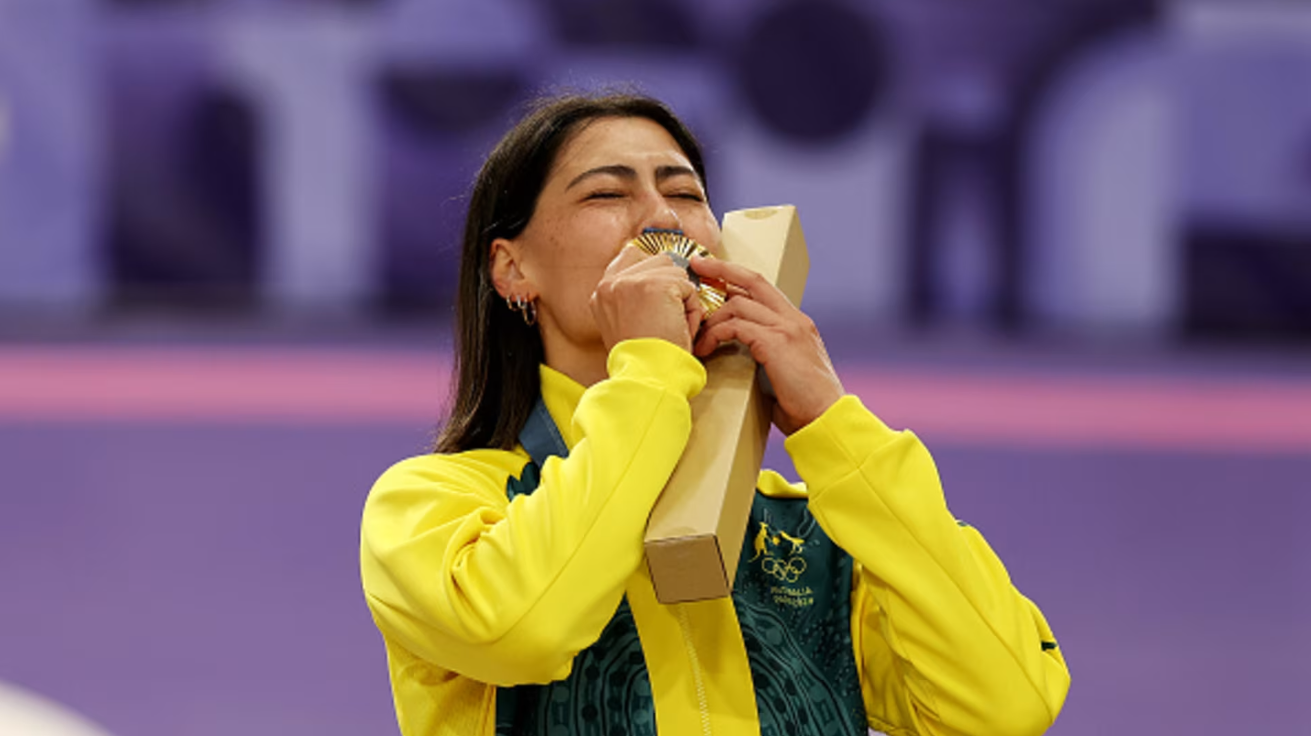
Australia’s history in this event is wretched, with previous hot favourites that crashed, as did Saya in the final heat of the semi finals in Tokyo. She really hoped to win a medal in Tokyo given Japan is the home country of her mother and she was riding for her brother, Kai, who crashed in a race in 2020 and suffered a severe brain injury that left him in a coma for 6 weeks. That crash was devastating for Saya, and then followed a run of injuries and several concussions that saw her contemplate quitting the sport. Come Paris, it was redemption time, and riding with Kai’s race number of 77, Saya was flawless from the very start in qualifying and in every round of racing, and won gold in emotional scenes. In her words: “All I had to do was just f…ing go and I f…ing went for it.” After the race, Saya provided one of the greatest and most honest sporting quotes about her quest for gold: “Either way, it was going to end in tears, and I wanted to make sure they are happy tears.” She’s a legend. Just prior to her race, her boyfriend, Romain Mahieu, riding for France, won bronze in the men’s event behind two other Frenchmen. He embraced her as she crossed the line and after she let out a guttural scream. Unknown to Saya, her gold was the third that Australia won that day in 77 minutes.
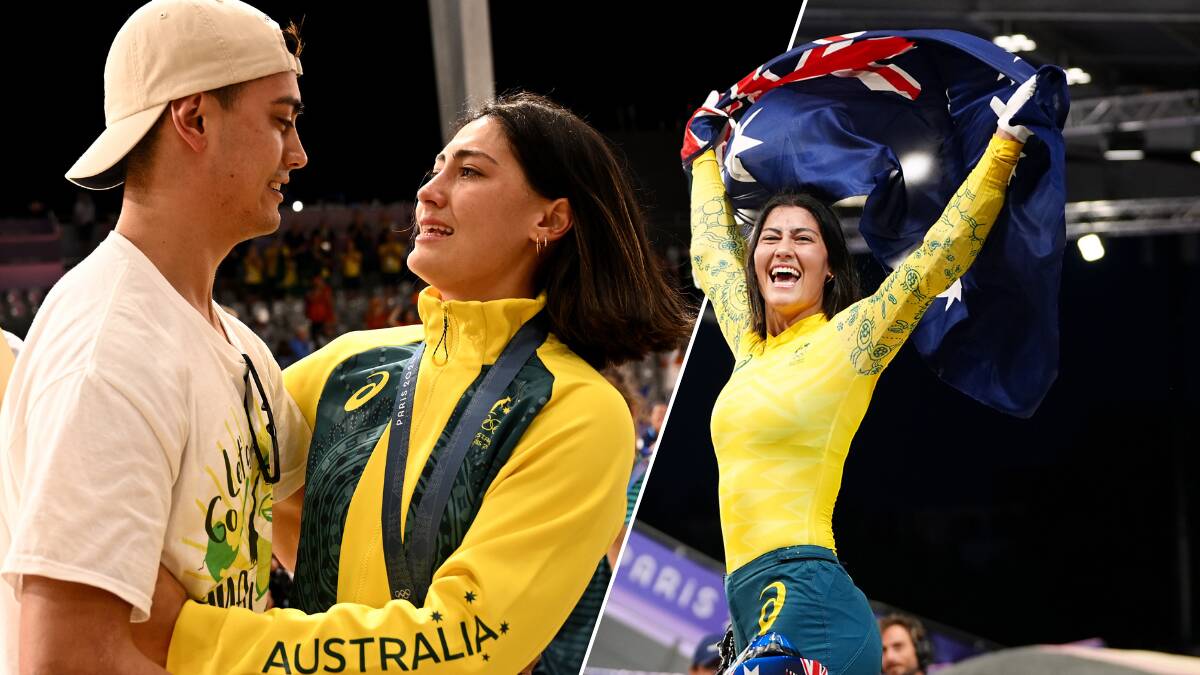
The two golds that preceded Saya’s were those of McEvoy and McKeown as listed above. That personally made that day, 2 August 2024, our greatest day in Olympic history. Too often we get obsessed by total medals won instead of savouring them individually. That day we got the chance.
Paris 2024
Paris 2024 were a wonderful Olympics. The French did everything right, except perhaps not converting some minor medals to gold (16 gold, 26 silver and 22 bronze for 64 total). The opening ceremony along the Seine River was a novel idea, especially for the parade of nations, and the lighting of the cauldron was spectacular. Then the French took the opposite approach when snuffing the flame at the closing ceremony. The crowds were loud and passionate, all the venues and locations were spectacular, and there was so much available free to the general public. Little touches like the medalists taking selfies were appreciated, while Champions Park, at the foot of the Eiffel Tower, where medalists were presented to the public, will no doubt be a feature of future Olympic Games. The Winter Games already had something similar with their medal ceremonies conducted on a big public stage in the actual host city, rather than on some remote ski slope, and now the Summer Games have their own version. Paris certainly did it their way. The closing ceremony ending with a breathtaking performance of My Way by Yseult was perfect, while the rendition of the United States national anthem by H.E.R. earlier in the evening was among the best ever. Truly a superb Games – c’est magnifique! – and now my favourite Olympics ever ahead of London 2012 and Barcelona 1992. Merci, Paris!
AUSTRALIA’S MEDALS
GOLD
Athletics
Women’s Pole Vault – Nina KENNEDY
Canoe Slalom
Women’s Kayak Single – Jessica FOX
Women’s Canoe Single – Jessica FOX
Women’s Kayak Cross – Noemie FOX
Cycling BMX Racing
Women – Saya SAKAKIBARA
Cycling Road
Women’s Individual Time Trial – Grace BROWN
Cycling Track
Men’s Team Pursuit – Australia
Sailing
Men’s Dinghy – Matt WEARN
Skateboarding
Women’s Park – Arisa TREW
Men’s Park – Keegan PALMER
Swimming
Women’s 200m Freestyle – Mollie O’CALLAGHAN
Women’s 400m Freestyle – Ariarne TITMUS
Women’s 100m Backstroke – Kaylee McKEOWN
Women’s 200m Backstroke – Kaylee McKEOWN
Women’s 4 x 100m Freestyle Relay – Australia
Women’s 4 x 200m Freestyle Relay – Australia
Men’s 50m Freestyle – Cameron McEVOY
Tennis
Men’s Doubles – EBDEN/PEERS
SILVER
Athletics
Women’s 1500m – Jessica HULL
Women’s High Jump Nicola OLYSLAGERS
Canoe Sprint
Men’s Kayak Four 500m – Australia
Cycling Track
Men’s Sprint – Matthew RICHARDSON
Men’s Keirin – Matthew RICHARDSON
Diving
Women’s 3m Springboard – Maddison KEENEY
Equestrian
Eventing Individual – Christopher BURTON
Marathon Swimming
Women’s 10km – Moesha JOHNSON
Sailing
Men’s Windsurfing – Grae MORRIS
Surfing
Men – Jack ROBINSON
Swimming
Women’s 50m Freestyle – Meg HARRIS
Women’s 200m Freestyle – Ariarne TITMUS
Women’s 800m Freestyle – Ariarne TITMUS
Women’s 4 x 100m Medley Relay – Australia
Men’s 100m Freestyle – Kyle CHALMERS
Men’s 400m Freestyle – Elijah WINNINGTON
Men’s 200m Breaststroke – Zac STUBBLETY-COOK
Men’s 4 x 100m Freestyle Relay – Australia
Water Polo
Women – Australia
BRONZE
Athletics
Men’s Discus Throw – Matthew DENNY
Women’s High Jump – Eleanor PATTERSON
Women’s 20km Race Walk – Jemima MONTAG
Marathon Race Walk Relay Mixed – COWLEY R/MONTAG J
Basketball
Women – Australia
Boxing
Men’s 57kg – Charlie SENIOR
Women’s 75kg – Caitlin PARKER
Canoe Sprint
Men’s Kayak Double 500m – van der WE/GREEN
Cycling BMX Freestyle
Women’s Park – Natalya DIEHM
Cycling Track
Men’s Team Sprint – Australia
Men’s Keirin – Matthew GLAETZER
Rowing
Women’s Pair – MORRISON/McINTYRE
Shooting
Trap Women – Penny SMITH
Swimming
Women’s 200m Individual Medley – Kaylee McKEOWN
Men’s 4 x 200m Freestyle Relay – Australia
Mixed 4 x 100m Medley Relay – Australia
France 2019 – Women’s World Cup Review
Tokyo 2020 Olympic Games Review – Grading Australia’s Performance
 Socceroo Realm