
Paris 2024 Review: Matildas World Cup Heroes to Olympic Flops & Top 5 Australia Gold Medals

16 August 2024

What a difference a year makes. Last year at the Women’s World Cup in Australia and New Zealand, the Matildas, Australia’s national women’s football team, became the toast of the nation during their run to the semi finals. A year later, at the Paris 2024 Olympics, they were bundled out in the first round in one of the most embarrassing displays ever witnessed by an Australian national football team. The Matildas could not even achieve the low standard of being two of the best third placed teams out of the three groups, even with Canada docked 6 points in one of the other groups. It was also their earliest elimination since Sydney 2000.

Australia knocked out of the Paris 2024 Olympics following a 2-1 loss to USA. Olympics Review & Top 5 Australia Gold Medals
Australia knocked out of the Paris 2024 Olympics following a 2-1 loss to USA – Image: Getty

After a 3-0 loss in the opening game to Germany, Australia inexplicable were 5-2 behind against Zambia, and only sneaking the win 6-5 thanks to an own goal, a shocking goalkeeping error, and a sloppy penalty conceded. Winning that game was a moment of relief, not of rejoice, yet they celebrated like it was a great success. The final game, which Australia were required to win, finished in a 2-1 loss to the USA. That was a flattering result, with the Americans dominant and Australia only grabbing a goal near the end to make it interesting.

The theme of all these losses was terrible defending. It was well known that Australia had trouble defending set pieces, so to see Germany score their first two goals from corners was galling. It’s like they learnt nothing. Coach, Tony Gustavsson, publicly stated it was an area that needed work heading into the Olympics, yet when the moment came, Germany had zero difficulties finding a free player and scoring. The USA’s first goal against Australia also came from a corner.

In hindsight, perhaps the 2023 World Cup was flattering. After a scrappy 1-0 win over Ireland, Australia lost 3-2 to Nigeria before defeating Canada 4-0. That match was probably Australia’s best performance under Gustavsson, and about the only time they beat a quality opponent (Canada were the Olympic champions from 2021 in Tokyo). Australia then beat Denmark 2-0 in the round of 16. In the quarter finals, it took a penalty shootout to beat France following a 0-0 final score, and then England and Sweden outclassed Australia 3-1 and 2-0, respectively, in the semi final and the third placed game.

The Matildas’ woes actually started way earlier than in 2023. In January of 2019, just 5 months before the World Cup in France, Alen Stajcic was sacked as coach of the Matildas by Football Federation Australia for supposedly overseeing a poor playing environment. This followed a “Matildas Wellbeing Audit”, which was always dubious, as it seemed an orchestrated affair in response to a few players complaining about a “culture of fear”. Apparently, a quarter of them responded that they felt psychological distress and many were afraid to ask for support.

Despite the supposed problems under Alen Stajcic, that era saw the Matildas at their best when they won the Tournament of Nations in 2017 held in the United States, beating USA, Japan and thrashing Brazil 6-1 along the way. They followed that in the 2018 tournament with wins over Brazil and Japan and a draw against the USA to finish second to the Americans on goal difference.

Ante Milicic replaced Stajcic for the 2019 World Cup held in June and July, where Australia were defensively abhorrent. Following 5-2 and 3-0 losses to the USA and Netherlands, respectively, in warm up games, Australia lost 2-1 to a dominant Italy in the first World Cup game. Australia then went two goals down to Brazil before winning 3-2. Poor goalkeeping by Jamaica contributed to Australia winning 4-1 in the final game. Australia were then bundled out on penalties in the round of 16 by Norway following a 1-1 draw.

Curiously, this was the not first time an uprising by the Matildas caused the removal of a coach. In 2014, a player mutiny against Hesterine de Reus saw her sacked by the FFA. Apparently, she was too tough on the players. Fast forward to the Gustavsson era, we had a coach that seemed to pamper, mollycoddle and let the players run the show rather than force his imprint on the team. Following the Olympics exit, some players labelled his era as “disorganised chaos”. That really shows he lacked sufficient control and authority within the team. A notorious trait of his was constantly being boastful about the team, which is a sign of hiding weaknesses and trying to avoid scrutiny.

Former Matildas coach Tom Sermanni responded about the post-Olympics whinging and said it’s easy to find upset or unhappy players. That seems a pattern now, with a core group of players actually running the team. When it gets too tough, a few of them initiate a revolt. Gustavsson just let them have it rather than fight it. With a bunch of spoiled brats, a team led by a con man not a coach, and a team operating on the moronic “Til it’s done” motto as though a major championship will just automatically happen, the whole campaign reeked of distraction, entitlement and laziness. The end result was no surprise in that context.

Australia’s Paris 2024 Medal Results

18 Gold, 19 Silver, 16 Bronze

It does make you wonder why even bother spending so much on team sports for only one set of medals on offer when swimming has a dozen opportunities within a week. Football is a bit different in that it’s already a mainstream sport and highly popular. Something like hockey, where Australia has performed abysmally for the past four Olympics, and it’s a sport with niche appeal, seems a waste of time.

Australia’s haul of 18 gold, 19 silver and 16 bronze medals, for a total of 53 medals, was an outstanding result, and the second highest total behind the 58 won in Sydney (16 gold, 25 silver, 17 bronze). While there are more sports and events than ever (no skateboarding or BMX in Sydney and Australia won 13 gold from 151 events in Melbourne in 1956 vs 18 from 329 in Paris), the competition is overall tougher. The early onslaught of gold in Paris was particularly stunning, while the hopes to reach 20 gold slipped away with a rush of silver towards the end.

After just 7 days, Australia had 11 gold, 6 silver and 5 bronze, so 22 medals within a week, and half of them gold. For the next 9 days it was 7 gold, 12 silver and 14 bronze. This reflects more that Australia’s most dominant sport, swimming, was held in the first week, while the canoe slalom was also scheduled early where 2 gold medals were quickly won thanks to Jessica Fox. Swimming contributed 7 gold, with the women’s road cycling time trial on the first day delivering gold and women’s BMX racing the 11th gold.

The remaining 7 gold medals came from canoe slalom (women’s kayak cross), tennis (men’s doubles), 2 in skateboarding (men’s and women’s park), sailing (men’s dinghy), track cycling (men’s team pursuit) and athletics (women’s pole vault). The last day that Australia won gold medals were the four on 7 August 2024, or the Wednesday of week 2, and then no more came over the final four days of the Games. Those four gold were the sailing, men’s skateboarding and the track cycling, with the pole vault the very final gold medal won. Note, that sailing gold would have arrived a day earlier if not for weather delays, so it was more a coincidence that Australia won four golds that day. Matt Wearn’s lead was actually so large that the final race was mostly a formality (he won it anyway). It was also the fourth straight Olympics that Australia won the men’s dinghy in sailing, with Wearn repeating his effort from Tokyo.

It must be mentioned that most of these medals, and specifically the overall haul, was not a surprise. Australia spends a lot of money on Olympic athletes and sent the third largest team behind USA and the hosts, France. The aim is to finish top 5 at every Olympics. Australia finished fourth, just squeaked out of third on the final day by Japan when they won two golds in wrestling. As the previous hosts, Japan is no doubt feeling the legacy effect of the money invested in sport for their home Games, and finished with an excellent haul of 20 gold (including 8 in wrestling), 12 silver and 13 bronze for 45 total.

Could Australia have done even better?

Australia actually missed several excellent chances for gold. Gracenote, the data company that analyses form leading into the Olympics, predicted Australia would win 54 medals – just one more than the actual. Their breakdown was 15 gold, 23 silver and 16 bronze. Most interesting of all, they predicted 10 gold in swimming, not the eventual 7. The missed predictions were the men’s 200m breaststroke, women’s medley relay and probably the women’s 100m freestyle. French superstar Leon Marchand, who won four events, easily beat Zac Stubblety-Cook into silver in the breaststroke. USA won the relay in world record time. The 10th event is not mentioned and I presume it’s the women’s 100m freestyle given the strength of Mollie O’Callaghan. Sweden’s Sarah Sjöström surprisingly won gold after initially deciding not to race it, while O’Callaghan could only finish fourth. Had she swum her personal best, should would have won. The other option could have been the men’s 400m freestyle in which Elijah Winnington was beaten into silver in a fairly close race. Sjöström would win her pet event, the 50m freestyle too.

Given the 9 swimming gold medals won at Tokyo 2020 (held in 2021) and the bravado coming into Paris to beat the USA, Australia would have hoped to win at least 9. The final total was 7 gold, 8 silver and 3 bronze. In hindsight, the women’s medley relay was an improbable chance, so would have expected the women’s 100m freestyle and one of the other two to come through. Countering that, Australia winning the 50m freestyle thanks to Cameron McEvoy was the trickiest of the predicted golds by Gracenote, and it was a gold that was highly hoped more than expected.

With two more gold medals, Australia would have won 20 gold total for the Games, finished third overall, and beaten the USA by 1 gold to win the swim meet itself. They’ve only done that once before: at the Melbourne 1956 Olympics (8 golds to 2 from 13 swimming events), where they also finished third overall with 13 gold. Curiously, France’s Leon Marchand won 4 by himself in Paris and Canada’s Summer McIntosh won 3. McIntosh actually beat 3 Americans into silver so Australia can thank her for getting so close to the USA. Interesting that Australia does not produce such superstar swimmers like Marchand and McIntosh capable of winning more than 2 gold medals, relying more on specialists and team depth. Shane Gould is the only swimmer, and any athlete, to win three individual events at a single Olympics, when she won the women’s 200m and 400m freestyle, and the 200m medley, at the 1972 Munich Olympics. She also took silver in the 800m freestyle and bronze in the 100m freestyle.

The other tricky golds won were women’s BMX racing, women’s kayak cross, men’s doubles tennis, women’s skateboarding park and women’s pole vault. All were good chances, if not strong chances; it’s just that things can go wrong. Then there are the misses: zero from rowing (always expect one or two gold; only won one bronze), track cycling (could have won one more with luck), kayak sprint (lost men’s K2 500m by 0.04 seconds) and men’s BMX freestyle (defending champion fell in all three rounds after qualifying in third). Australia were also close to winning the men’s windsurfing, men’s surfing (unlucky with waves), women’s water polo and individual eventing in equestrian, with all of them winning silver instead. Jessica Hull was unlucky to be beaten by a legend in the women’s 1500m athletics. Kenya’s Faith Kipyegon won the event for the third straight Olympics. Women’s hockey were expected to challenge for gold, and choked at the quarter final stage yet again. They’ve been a disaster since their win in 2000. Women’s rugby sevens also had a shocker, missing a medal entirely.

Balancing the gold medals that were a bit tricky versus the plethora of other chances not converted, Australia really should have won 20 gold medals at these Olympics. We’ll take 18 and still call it a wild result, even if, on examination, it was optimal.

Minor Medals

Silver and Bronze can be a monumental achievement, like men’s basketball finally winning a medal at Tokyo 2020 with bronze. For Paris 2024, it’s hard to go past the silver Jessica Hull won in the women’s 1500m on the track as the best minor medal. She was in a purple patch of form, having recently broken the 2000m world record (even if it’s a rarely contested race), and raced every round perfectly. While silver will never be as good as gold (had she won gold, our response to her run would be stratospheric!), her achievement is undeniably stellar. Australians just don’t win medals in middle distance races, and we need to go back to the 1950s and 1960s and the likes of John Landy, Herb Elliot, Brenda Jones and Ralph Doubell for middle distance medals.

Raygun

Yes, Rachel Gunn in the breaking (break dancing) was a joke and a complete embarrassment. Her appearance speaks more about the selection process and the drive to get the sport into the Olympics before it was ready. The World DanceSport Federation, who have tried to get ballroom dancing into the Games over the years, only became the official governing body of breaking in 2018. They really had little knowledge of it, and farmed out the qualifying process to regional organisations (AUSBreaking for Oceania). The judging panel was comprised of nine independent international judges as selected by WDSF. Raygun won the Oceania spot. Then she made a mockery of it in Paris. Knowing she could not beat the other b-girls on “the dynamic and the power moves”, she decided to be “artistic and creative”. Meaning, she wore a daggy tracksuit and hopped around the stage and rolled around the floor like an idiot, and lost 54-0. If you’re outclassed, fine. At least try and compete as intended by the event.

Other Countries

Applaud our neighbours, New Zealand, with 10 gold, 7 silver and 3 bronze for 20 medals total. Ellesse Andrews won two in track cycling while canoe sprint legend, Lisa Carrington, won 3 more gold medals (in the 500m races for K1, K2 and K4) to add to her 5 previous gold medals. On the silly per capita argument (wealth and investment is more relevant than raw population), NZ won the medal tally ahead of Netherlands (15, 7 and 12 for 34 total) and Australia, if you exclude tiny countries like Dominica and Saint Lucia.

USA won the overall medal tally when they won the final event of the Games: women’s basketball. They finished equal with China on gold (40 each), and won far more minor medals. On total medals, it was USA with 126, China 91, Great Britain 65 (+4 spots vs rank by gold), France 64 (+1), Australia 53 (-1), Japan 45 (-3), Italy 40 (+2), Netherlands 34 (-2), Germany 33 (+1) and Korea 32 (-2). As for the American media listing the medal table by total medals instead of gold, they have always done that (and it’s common in Canada). It’s a quirk of theirs, not a new scheme to look good after a slow start to the Games. Perhaps after the ignorant ridicule, they might follow the rest of the world in future and list by gold first.
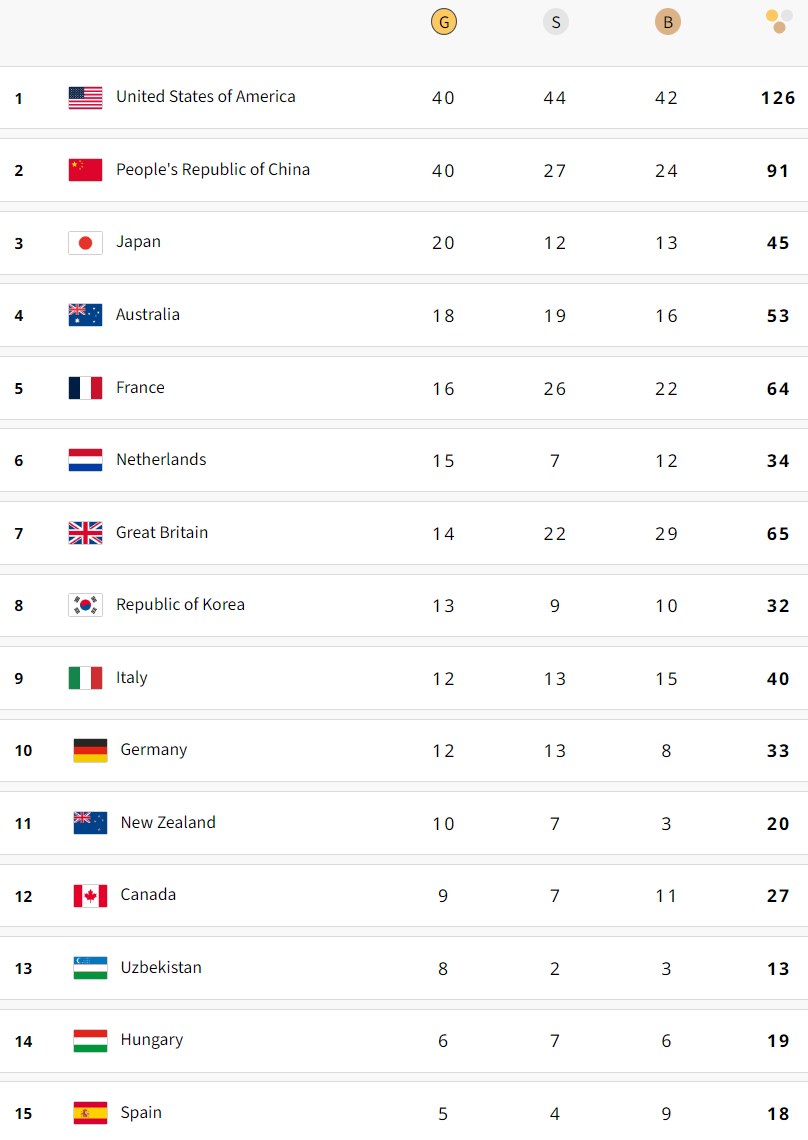
Paris 2024 Olympics - Final Medal Table. Olympics Review & Top 5 Australia Gold Medals.
Paris 2024 Olympics – Final Medal Table

Australia’s Top 5 Gold Medals

5 Kaylee McKeown (200m backstroke – women)

The double double! Kaylee not only became the only Australian to win four individual gold medals at the Olympics (even the famed Ian Thorpe could only manage three), she was the first to defend two Olympic titles. She won both backstroke events, the 100m and the 200m, at successive Games. If gold medals are everything at the Olympics, then she’s also Australia’s greatest Olympian ever.

4 Team Pursuit (track cycling – men)

Since Australia won five gold medals on the velodrome in 2004, which included the men’s team pursuit, it’s been a horror run for the track cycling team. Only one gold medal since, by Anna Meares in 2012 in the women’s sprint, and hopes were high for the team pursuit in Paris. The men broke the world record with a phenomenal time of 3:40:730 in the semi finals (I remember when breaking 4 minutes was a major achievement) and then it was a matter of beating arch rivals, Great Britain, in the gold medal race. It was neck and neck throughout with Australia holding onto the slightest of advantages. The Brits pushed it so hard that one of their riders slipped off the saddle on the final lap and it was all over.

3 Cameron McEvoy (50m freestyle – men)

A story of resilience and perseverance as it took McEvoy until his fourth Olympics to finally win gold. McEvoy choked badly at Rio 2016 as a hot favourite in the 100m and almost quit the sport following the Tokyo Games in 2021 in which he underperformed. He revitalised his training routine, taking a more scientific approach and reducing his time considerably in the pool. It worked. He won gold at the 2023 World Championships and now it was it matter of putting all together in Paris. The squeal from commentator Giaan Rooney as McEvoy touched the wall said it all. While the women won all of Australia’s other gold medals in the pool, the best one was from a man.

2 Jessica Fox (K1 canoe slalom – women)

Another story of resilience and perseverance. Since bursting onto the scene with a silver at London 2012, big things were expected from Fox at Rio 2016 and Tokyo 2020. Both times ended in disappointment after errors cost her the gold and relegating her to bronze. While she recovered in Tokyo to win the new event of the C1 slalom to finally win a gold medal, it wasn’t THE gold medal. Fox would need to wait for her fourth Olympics to win that elusive K1 gold and this time there were no mistakes. Again, the reaction said it all, with screams and tears and relief and joy! That was just from me! Fox’s emotions were at another level. Just hearing her name announced at the medal ceremony as “Olympic champion” brought more tears to her, and myself. Fox would then win the C1 event too, while her little sister, Noemie, stunned herself, Jessica, her parents, me, and Australia, by winning the kayak cross. Jessica was knocked out in an earlier round, in a race that involved Noemie, so it shows you the fickle nature of that event. The thing is, Noemie was exceptional in all the rounds, putting herself in the right position and nailing all the gates, so her victory was all hers. Her win also meant the Fox sisters became the first ever siblings to win an individual gold medal in Australian Olympic history.

1 Saya Sakakibara (BMX racing – women)
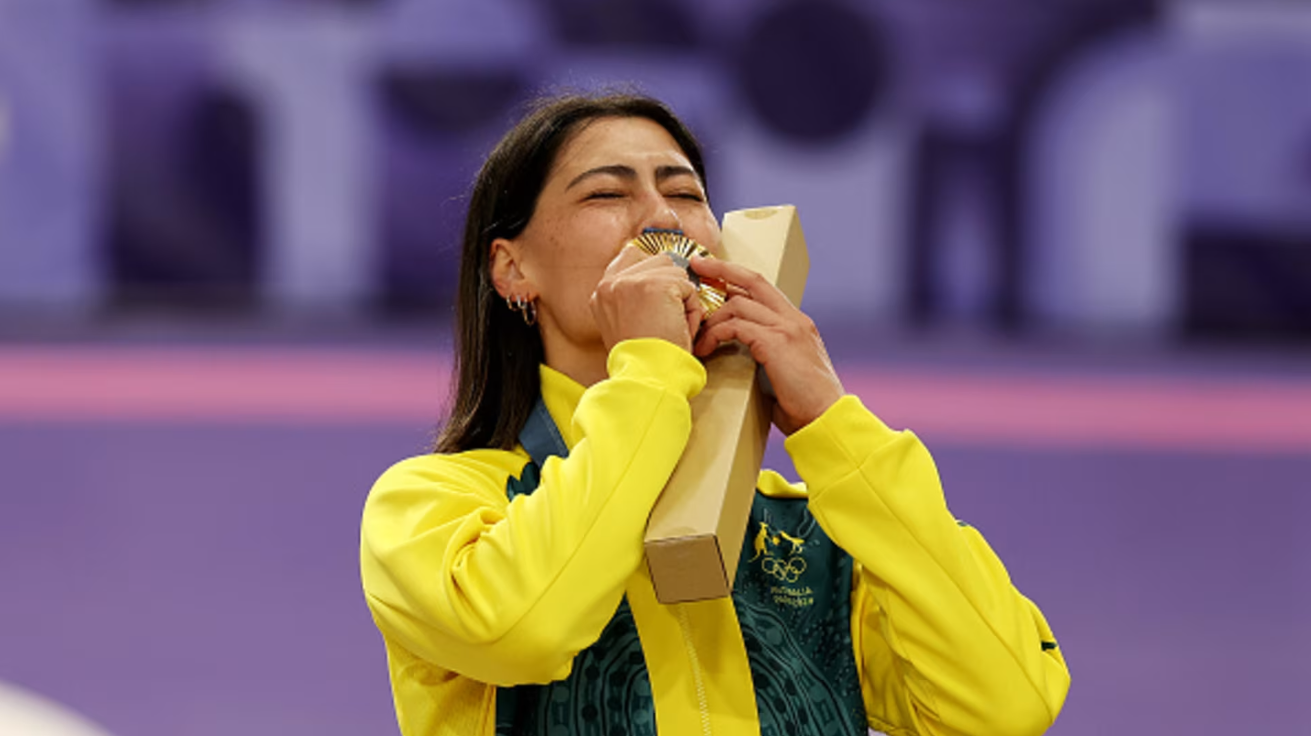
Saya Sakakibara wins the gold medal in BMX Racing at Paris 2024. Olympics Review & Top 5 Australia Gold Medals
An emotional gold medal for Saya Sakakibara in BMX Racing at Paris 2024 – Image: Getty

Australia’s history in this event is wretched, with previous hot favourites that crashed, as did Saya in the final heat of the semi finals in Tokyo. She really hoped to win a medal in Tokyo given Japan is the home country of her mother and she was riding for her brother, Kai, who crashed in a race in 2020 and suffered a severe brain injury that left him in a coma for 6 weeks. That crash was devastating for Saya, and then followed a run of injuries and several concussions that saw her contemplate quitting the sport. Come Paris, it was redemption time, and riding with Kai’s race number of 77, Saya was flawless from the very start in qualifying and in every round of racing, and won gold in emotional scenes. In her words: “All I had to do was just f…ing go and I f…ing went for it.” After the race, Saya provided one of the greatest and most honest sporting quotes about her quest for gold: “Either way, it was going to end in tears, and I wanted to make sure they are happy tears.” She’s a legend. Just prior to her race, her boyfriend, Romain Mahieu, riding for France, won bronze in the men’s event behind two other Frenchmen. He embraced her as she crossed the line and after she let out a guttural scream. Unknown to Saya, her gold was the third that Australia won that day in 77 minutes.
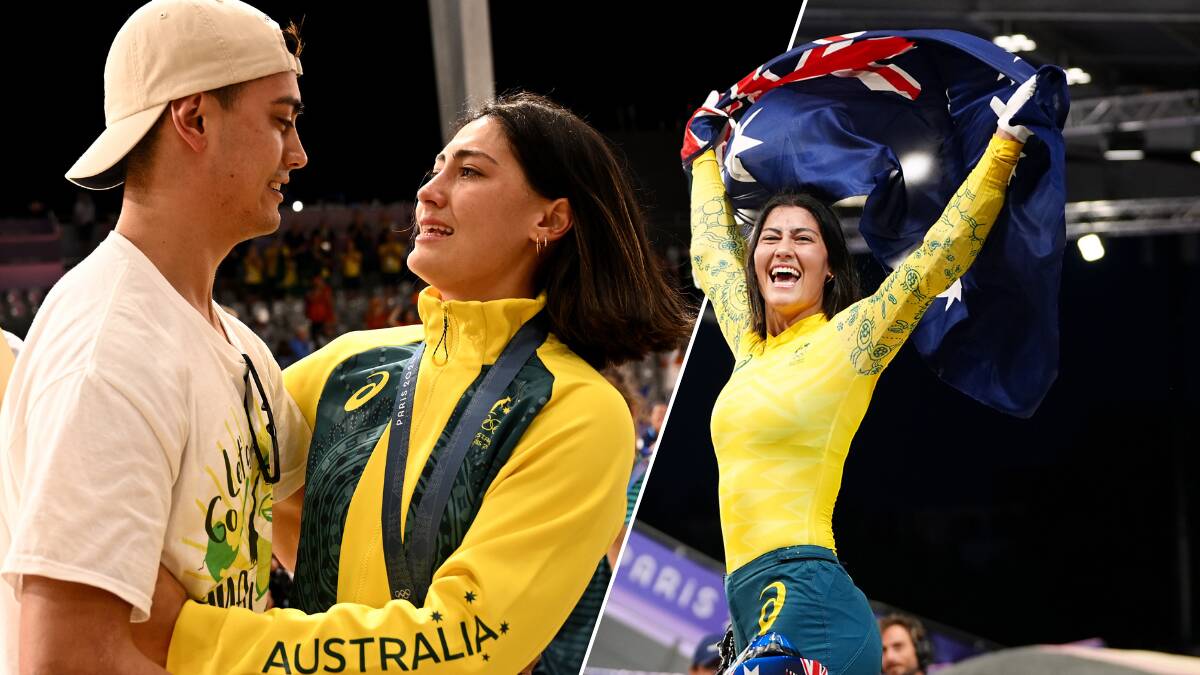
Saya Sakakibara celebrates her Olympic gold medal with brother Kai at Paris 2024. Olympics Review & Top 5 Australia Gold Medals.
Saya Sakakibara celebrates her Olympic gold medal with brother Kai at Paris 2024 – Image: AAP

The two golds that preceded Saya’s were those of McEvoy and McKeown as listed above. That personally made that day, 2 August 2024, our greatest day in Olympic history. Too often we get obsessed by total medals won instead of savouring them individually. That day we got the chance.

Paris 2024

Paris 2024 were a wonderful Olympics. The French did everything right, except perhaps not converting some minor medals to gold (16 gold, 26 silver and 22 bronze for 64 total). The opening ceremony along the Seine River was a novel idea, especially for the parade of nations, and the lighting of the cauldron was spectacular. Then the French took the opposite approach when snuffing the flame at the closing ceremony. The crowds were loud and passionate, all the venues and locations were spectacular, and there was so much available free to the general public. Little touches like the medalists taking selfies were appreciated, while Champions Park, at the foot of the Eiffel Tower, where medalists were presented to the public, will no doubt be a feature of future Olympic Games. The Winter Games already had something similar with their medal ceremonies conducted on a big public stage in the actual host city, rather than on some remote ski slope, and now the Summer Games have their own version. Paris certainly did it their way. The closing ceremony ending with a breathtaking performance of My Way by Yseult was perfect, while the rendition of the United States national anthem by H.E.R. earlier in the evening was among the best ever. Truly a superb Games – c’est magnifique! – and now my favourite Olympics ever ahead of London 2012 and Barcelona 1992. Merci, Paris!

AUSTRALIA’S MEDALS

GOLD

Athletics

Women’s Pole Vault – Nina KENNEDY

Canoe Slalom

Women’s Kayak Single – Jessica FOX
Women’s Canoe Single – Jessica FOX
Women’s Kayak Cross – Noemie FOX

Cycling BMX Racing

Women – Saya SAKAKIBARA

Cycling Road

Women’s Individual Time Trial – Grace BROWN

Cycling Track

Men’s Team Pursuit – Australia

Sailing

Men’s Dinghy – Matt WEARN

Skateboarding

Women’s Park – Arisa TREW
Men’s Park – Keegan PALMER

Swimming

Women’s 200m Freestyle – Mollie O’CALLAGHAN
Women’s 400m Freestyle – Ariarne TITMUS
Women’s 100m Backstroke – Kaylee McKEOWN
Women’s 200m Backstroke – Kaylee McKEOWN
Women’s 4 x 100m Freestyle Relay – Australia
Women’s 4 x 200m Freestyle Relay – Australia
Men’s 50m Freestyle – Cameron McEVOY

Tennis

Men’s Doubles – EBDEN/PEERS

SILVER

Athletics

Women’s 1500m – Jessica HULL
Women’s High Jump Nicola OLYSLAGERS

Canoe Sprint

Men’s Kayak Four 500m – Australia

Cycling Track

Men’s Sprint – Matthew RICHARDSON
Men’s Keirin – Matthew RICHARDSON

Diving

Women’s 3m Springboard – Maddison KEENEY

Equestrian

Eventing Individual – Christopher BURTON

Marathon Swimming

Women’s 10km – Moesha JOHNSON

Sailing

Men’s Windsurfing – Grae MORRIS

Surfing

Men – Jack ROBINSON

Swimming

Women’s 50m Freestyle – Meg HARRIS
Women’s 200m Freestyle – Ariarne TITMUS
Women’s 800m Freestyle – Ariarne TITMUS
Women’s 4 x 100m Medley Relay – Australia
Men’s 100m Freestyle – Kyle CHALMERS
Men’s 400m Freestyle – Elijah WINNINGTON
Men’s 200m Breaststroke – Zac STUBBLETY-COOK
Men’s 4 x 100m Freestyle Relay – Australia

Water Polo

Women – Australia

BRONZE

Athletics

Men’s Discus Throw – Matthew DENNY
Women’s High Jump – Eleanor PATTERSON
Women’s 20km Race Walk – Jemima MONTAG
Marathon Race Walk Relay Mixed – COWLEY R/MONTAG J

Basketball

Women – Australia

Boxing

Men’s 57kg – Charlie SENIOR
Women’s 75kg – Caitlin PARKER

Canoe Sprint

Men’s Kayak Double 500m – van der WE/GREEN

Cycling BMX Freestyle

Women’s Park – Natalya DIEHM

Cycling Track

Men’s Team Sprint – Australia
Men’s Keirin – Matthew GLAETZER

Rowing

Women’s Pair – MORRISON/McINTYRE

Shooting

Trap Women – Penny SMITH

Swimming

Women’s 200m Individual Medley – Kaylee McKEOWN
Men’s 4 x 200m Freestyle Relay – Australia
Mixed 4 x 100m Medley Relay – Australia

France 2019 – Women’s World Cup Review

Tokyo 2020 Olympic Games Review – Grading Australia’s Performance
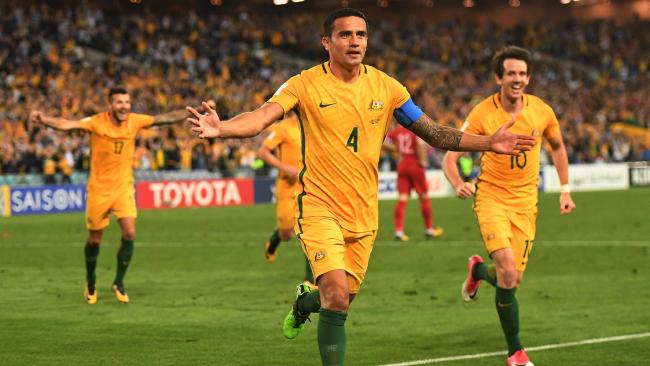
Australia through to play Honduras as Ange Postecoglou shoots through

20 October 2017

Less than 12 hours after Australia beat Syria 2-1 in extra time and 3-2 on aggregate to progress to the final stage of World Cup qualifying, the nation awoke to news that coach Ange Postecoglou would quit the Socceroos at the conclusion of the campaign whether Australia qualifies for Russia 2018 or not. While he hasn’t explicitly confirmed media reports are correct, he hasn’t denied them either, saying: “My sole focus is on preparing the team for the final two qualifying matches. I will not let anything compromise the team’s journey on getting to a fourth consecutive FIFA World Cup.” The FFA echoed those sentiments, saying there’s plenty of time between the last qualifier and the World Cup “to lock in our set up as soon as possible to maximise our preparation time”.

It’s believed frustration at the growing criticism towards Postecoglou, specifically about results and the change of formation mid-campaign, is the reason for the early departure. If that’s true, it shows a remarkable weakness in resilience and a capitulation in belief of both he and the team. Not to mention it would seem completely out of character, especially for someone that boasted about playing “the Australian way” and leaving an imprint on the game. It’s almost un-Australian. Or is it?

If you consider the true Australian sports psyche, it is actually one that fails under pressure, and is notorious for quitting when things get a bit tough. Cathy Freeman denied herself an almost certain second gold medal by quitting athletics a year before the Athens Olympics, while Ian Thorpe began to experiment in other disciplines and distances, and eventually became one of our biggest sooks ever. Sound familiar? Australia’s reputed fighting style really only exists when backs are to the wall – essentially when there’s nothing to lose and there’s no pressure at all. When leading and being challenged, it will either succumb or try to escape. If escape is not possible, the coping mechanism is to try bully past the opposition, which invariably makes capitulations even worse. The debacle in swimming at the Rio Olympics is the most recent example, while the Test cricket team’s history is blotted by regular and notorious batting collapses. Now it’s Ange’s turn. It’s all suddenly a bit tough, and rather than fight it out and attempt to achieve a good result at the World Cup, it’s get out while you can. If that’s true, it will be a really sad epitaph on his coaching career.

The match itself was microcosm of the entire campaign with the task made more difficult than necessary by defensive blunders, sluggish transition between defence and attack, and wasted scoring opportunities both with final passes and shots. Syria scored after 6 minutes when Mark Milligan conceded possession in midfield, and while Australia equalised only seven minutes later thanks to Tim Cahill on the end of a sublime cross from Mathew Leckie, the game remained on a knife’s edge thanks to the odious away-goals rule. Remember, under this idiotic rule, if Australia conceded another it would mean they’d need two more before full time to avoid elimination even though it’s 3-3 on aggregate. Hardly an incentive to attack while playing at home, is it?

Despite dominating possession for large portions of the match, Australia didn’t create too many chances, much less score. It took Cahill – yes, him again – to rise in the box in the second half of extra time to head a cross from Robbie Kruse home. Naturally, that compelled Syria to desperately attack, and it was only a matter of inches that they didn’t score from a direct free kick in injury time of extra time. The ball struck the post and went wide. Poetic justice, you might say, as Australia had struck the post so many times in their previous two qualifiers. That included the final group match against Thailand, and the away leg of this series, played in neutral Malaysia, that finished 1-1. That was a fair result anyway after Syria was as good in the final 30 minutes as Australia were in the first 60 minutes. Even though Syria’s goal came from dreadful penalty call on Leckie, they really should have converted one of their numerous chances beforehand.

Tim Cahill saves Australia vs Syria - World Cup qualifier Sydney 2017-10-10

Tim Cahill – he saves Australia again (Image: AAP/News)

After a crazy final round of matches in CONCACAF, Honduras awaits Australia. USA were third on 12 points, with Panama and Honduras next on 10 points. Panama was in fourth – and the expected playoff opponent – thanks to a +5 goal difference over Panama. The final matches also favoured table positions remaining unchanged: Panama vs Costa Rica, Honduras vs Mexico and Trinidad & Tobago vs USA. USA only needed a draw to bottom team T&T to be safe or hope both Panama and Honduras lose. Instead, all three matches ended in upsets as the USA lost 2-1, Panama scored late to jump to third and qualify for their first ever World Cup, and Honduras beat Mexico to jump to fourth, leaving the USA eliminated.

Until the win over Mexico, Honduras’ only other points came from two wins against T&T and a draw against USA. While those mediocre results seem encouraging for Australia, their coach said they were unlucky through the group phase by conceding goals – and points – late in several games. Also note Honduras have qualified for the past two World Cups and the last time they played Australia at a meaningful level was at the 2000 Sydney Olympics when they won 2-1 and sent the Olyroos packing on the official first day of the Games (Australia lost 1-0 to Italy a few days prior). Countering that, Honduras lost all three games at Brazil 2014 and only managed a draw at South Africa 2010. Australia’s record is better having won and drawn in 2010 and performed really well in patches against Chile and Netherlands in 2014 despite losing all 3 matches. The teams seem well matched, and Australia is reputedly in the favoured position of playing home last. That might actually have a tangible benefit this time as Leckie and Milligan will return fresh after being suspended for the away-match due to accumulated yellow cards. Let’s hope Honduras don’t put the tie away before then.

The big concern is Ange Postecoglou. Is their still enough trust and belief within the team to play for him? Will he amend some of his stubborn tactics to ensure no soft goals are conceded? The incessant tactic to always play out from the back has made the team so predictable and easy for the opposition to apply pressure from midfield and force turnovers in dangerous areas. Syria capitalised in Sydney, and there’s no doubt the speedy Hondurans will be looking to do likewise.

The other problem is the team itself. It simply isn’t that good. It’s relying too often on a 37 year old part-time player to get it out of trouble. It’s never settled, with Postecoglou bizarrely starting Aaron Mooy on the bench at home to Syria. Thankfully Brad Smith was injured early to force Mooy on and undo the stupidity. Postecoglou seems obsessed with developing a good squad rather than a good team and possibly that’s his tacit admission of our weak playing stocks, and also his frustration that he can’t “change the landscape”, that it’s a recognition that he’s reached a limit with this team, and the team itself has reached its limit, and the system itself is too limiting for him. Win or lose against Honduras, it is the end of an era, and the Australian national team will face a restock, if not a major reboot.

Curious stat: With 48 goals, Australia has scored the most goals of any team in World Cup qualifying so far. Playing a long campaign of 20 matches no doubt helps.

The playoff is scheduled for Friday 10 November (Honduras time) and Wednesday 15 November (Australia Time).

Results

2017-10-05 Melaka: Syria 1 (Alsoma 85′ PK) – Australia 1 (Kruse 40′)
2017-10-10 Sydney: Australia 2 (Cahill 13′, 109′) – Syria 1 (Alsoma 6′)

Match Report


Asia wins as Australia win the Asian Cup of 2015

01 February 2015

Match Report, Asia’s Reaction, FIFA’s Reaction and Asia’s Future

31/01 Sydney: Korea Republic 1 – Australia 2 (1-1 FT)

The Asian Cup of 2015 needed the gripping final that it got to cement itself as the greatest moment in Australian football. It’s been a marvellous tournament, with thrilling football, big crowds and seamless organisation. The fact that the entire football community could so readily engage in the competition, especially to see games live, the tournament was so friendly, and that all the teams were our fellow Asian friends, made it more enjoyable, as a whole, than recent World Cups. Winning the championship surpasses Australia’s previous best triumph on home soil of qualifying for the 2006 World Cup. That was just a one-off game, whereas the Asian Cup was a proper tournament that required sustained high achievement over six games.

The final itself, just like the group game against Korea, could have gone either way. The Koreans had the three best chances of the first half, including an open header from a free kick, while Australia could only muster one decent shot on goal, that from Tim Cahill on a tight angle. Distinct from all previous opponents, Korea did not allow Australia to play its dominant possession game, pressuring high up the pitch, almost to the point Australia’s style collapsed. Australia’s opening goal, just before half time, ironically came from a deep pass direct from Trent Sainsbury to Massimo Luongo through one of very few channels the Koreans allowed. Even then, the pass needed Luongo’s deft skill to quickly turn past his marker, and then shoot quickly from 20 metres out. The “Luongoal” came out of nowhere, surprising everyone. It was fitting that Luongo, the man of the tournament, broke open the game with a stunning strike.

Korea dominated the second half, as you’d expect for a team chasing the game. They kept Australia’s defence busy as the match’s pattern became a sense of could Australia hold on. These were the critical moments of the match that ultimately caught Australia out. Even though the defence, in their defence (!), were superb, managing to repel almost everything, facts are that over an entire half, Korea would always create a few chances regardless of Australia’s defensive integrity. It ultimately became a matter of when Korea did, or whether Australia could exploit the open space available. Weaknesses in such situations were already observed in Australia’s previous two games and such profligacy would be punished against Korea. That Korea took until 91 minutes to slip a ball through for an equaliser, only made it heartbreaking for Australia, not undeserved for Korea

Reputedly, coach Ange Postecoglou told his players that extra time would be about making the Asian Cup story even better. Australia came out stronger and scored just before the end of the first period of extra time. It was a tenacious effort by Tomi Juric, who scrambled after a ball, was then doubled teamed on the goal-line, managed to flick the ball through the legs of a defender and then cross it low for James Troisi to slam home the spillage from goalie’s interception. The second period was part 2 of Korea on the press and Australia continually fluffing chances going forward. For some reason, players, when double teamed or even triple teamed, want to flick the ball through somehow. Fine if there’s no choice; terrible when you have a teammate on both wings in the clear, as was the most galling example by Juric really late in the game. 3-1 and you kill the game. Even when cramped in space, there still seems the obsession to pass it to other players tightly marked, rather than look for the obvious route out of a free play that there must be if the opposition is crowding you. This caused constant turnovers and must be the next step of Postecoglou’s development with the team. The two goals Australia scored were closer to a freak nature than of any great breakdown of the Korean defence.

The only disappointment with the final was the television coverage of the winning moment. With a camera still focused on Mathew Spiranovic after he repelled Korea’s final attack, those at home missed the moment of the referee’s whistle ending the game and missed seeing the jubilation of all the players on the field at once. Spiranovic seemed to have an eternity of coverage, then Postecoglou, then various players. Even the commentators missed the moment.

Asia’s Reaction

The Asian Football Confederation are ecstatic with this edition, with one official labelling it the best ever, and AFC president Shaikh Salman bin Ebrahim Al Khalifa glowing in his endorsement: “The tournament itself has been tremendous. Filled with quality and excitement, it was a fantastic festival of football that the whole of Asia can be proud of. As such, allow me to congratulate Australia for hosting such a memorable AFC Asian Cup. The whole world was presented with a competition that has been remarkable in spirit and in passion, and we have Australia to thank for that.” The biggest endorsement and validation and has come from Australia itself. Not just with words, it came with action.

All the garbage you read about Australia being “racist”, especially when the subject of dealing with illegal immigration is raised, this tournament showed the entire world the inclusive and welcoming nature that is modern day Australia. It’s doubtful any other Asian nation could showcase such a vibrant and passionate feel that this nation did for almost every single game. Crowds at just over 650k are the third highest ever, only behind China 2004 (1.02m) and South East Asia 2007 (690k). Cricket’s World Cup starts shortly, and if you want an idea of a true “lemon” on the global sporting scene in terms of general worldwide interest, local interest and crowds, look to that.

FIFA’s Reaction

FIFA President Sepp Blatter was in town for the final and also remarked on the amazing staging of this Asian Cup. He surprised no one when he lamented that no World Cup had yet been held in Australia, saying it’s “an unfortunate omission in sporting history because very few countries boast such a rich sporting culture and long list of champions” and that “we can say with confidence that it would be more than deserved if Australia were to stage the World Cup at some point.” Empty words by a sly and sleazy politician leading an even more sly and sleazy organisation. The World Cup bid was a debacle and if Australia has learnt one big lesson, it’s that any future bid must be foremost about football. Because of the over-reliance on oval grounds, the proposal for 2022 benefitted Australian Rules the most. Also the time of year, with Qatar 2022 certain to be staged in the northern winter, FIFA must formalise a flexible schedule so that a bidding nation can showcase the sport at its best.

With both the Asian and African Cups on in January, European clubs can clearly cope with this time of year, especially when most have winter breaks. The World Cup is only an extra week over those two continental ones. Even then, once the knockout stage started, Australia revived its A-League schedule during the Asian Cup. Therefore it’s only 3 weeks, maybe four, that the few European leagues not on a winter break (name England’s) might need to shut down. One or two leagues might need to re-schedule a few matches depending on the teams in the late stage of a World Cup. Note that this would happen only once every 16 years (at worst) and if it can’t be managed, then the entire notion of “world” in the World Cup needs to be re-examined.

Asia’s Future

Some unsavoury, older, comments emerged during the week about West Asia’s discomfort with Australia in the Asian confederation. It’s quite understandable considering many of them see it as Australia taking a World Cup spot without the region gaining much else in return. West Asia probably couldn’t care that much that the Asian Cup was such a success because, again, there’s no direct benefit to them. The reality is that strong teams make other teams stronger and that wallowing within your own little construct will only keep you down. We see that manifest with most Arab nations left behind at international level because their leagues have stagnated. Of the 10 Middle Eastern teams in Australia, seven went home after the group stage, with two of the 3 survivors coming out of a group of four Middle Eastern teams.

The World Cup situation has a simple answer. Rather than reduce competition (ejecting Australia has almost zero chance anyway), or contemplate the farcical notion of splitting West Asia entirely from the rest, Asia should embrace more competition. When Australia joined Asia, the expectation was that Asia’s final spot would be a playoff with Oceania. That occurred in 2010 when Bahrain lost to New Zealand, only to be dropped for 2014 when FIFA decided the two inter-continental playoffs should be randomly drawn. Asia copped South America where Jordan lost to Uruguay. Now is the time Asia seize their destiny and guarantee a full fifth spot by bringing Oceania into the fold. It’s a joke of a region, containing only New Zealand and 10 tiny Pacific island nations. There’s a reason Australia were desperate for decades to leave. With the Asian Cup expanding to 24 teams for the 2019 edition, and an expanded qualifying path for the 2018 World Cup, it makes even more sense to add Oceania to the mix to make a broader confederation representing all of Asia and the Pacific.

Full site: socceroorealm.com

On the precipice of mission accomplished

28 January 2015

26/01 Sydney: Korea Republic 2 – Iraq 0
27/01 Newcastle: Australia 2 – United Arab Emirates 0

Another polished performance saw Australia bound into the final of the Asian Cup after defeating the UAE 2-0. An impressive Korea Republic awaits them. Both teams won their semi-finals comfortably and both look to be the two teams entering the latter stages of the tournament in the best form and in the freshest condition. The final will be a rematch of the group A encounter in which the Koreans inflicted the Socceroos only loss. Korea enters the final not only undefeated, they haven’t conceded a goal during the entire tournament. While Australia has scored far more, they have conceded two. One was the very first goal of the tournament by Kuwait, and the second the solitary goal against the Koreans.

Like the quarter final against China, the semi final against UAE was broken open by two quick goals. This time they came within the first 15 minutes of the game, rather than around half time. One was a headed corner by Trent Sainsbury and the other a mid-range shot by Jason Davidson after it pinged out from a goal mouth scramble. The goals effectively killed the match, both in the UAE’s capacity to recover, and also killed the atmosphere. At 2-0 up, Australia was only in a position to lose, and without further goals coming, there seemed little to keep the crowd interested. The UAE’s best chance came immediately after Australia’s first goal, with a shot that skimmed the post. Other than that, any encroachment into the penalty box was easily snuffed out, leaving them restricted to mostly longer range efforts.

The only blemish with Australia’s performance was, for a second successive match, the inability to consolidate a result from the many chances created. Even ignoring the referees denying several goal chances with wrong offside calls (the one against Tim Cahill when he was 2 metres in his own half was particularly ridiculous), the conversion rate must improve against the miserly Koreans.

Curiously, Sainsbury made news during the week by saying UAE’s star player Omar Abdulrahman’s laziness could be exploited: “Very tidy on the ball, not the hardest worker and I think we can exploit that”. That they did, because Abdulrahman let Davidson waft forward to ultimately score that second goal. Abdulrahman made a late rush and challenge, to no avail. Australia also kept him under control, with that early opportunity that skimmed the post the only really dangerous chance he created.

Saturday night is shaping up to be a pivotal night in Australian football. It will be the first major trophy for the men’s team (the Matildas won the 2010 Asian Cup) and even the wretched rainy weather experienced in NSW for much of the tournament has disappeared for mostly fine days leading into the big night and on the night proper. When Ange Postecoglou was appointed as coach barely more than a year ago, the clear mission was to produce a plan to maximise the chances of winning the Asian Cup. Right now, he’s on the precipice of mission accomplished.

Full site: socceroorealm.com

Australia through to the semis, Iran and Japan out

24 January 2015

Quarter Finals
21/01 Melbourne: Korea 2 – Uzbekistan 0 (AET)
21/01 Brisbane: Australia 2 – China
22/01 Canberra: Iran 3 – Iraq 3 (1-1 FT, 6-7 PK)
22/01 Sydney: Japan 1 – UAE 1 (4-5 PK)

So much for the “mother of all football games” of Australia facing Iran in the Asian Cup final, with a match against Japan in the semis before that. While both Australia and Iran did their jobs in the group phase (Australia lost their last match, Iran won theirs), neither Japan or Iran could survive the first knockout game. Iran was terribly unlucky, losing a man early through a dubious red card when leading and then responding twice in extra time to draw the game level, while Japan failed to convert their rare chances eked out against the resolute UAE defence. Both matches went to penalty shootouts that proved notable for none of the four goalies able to make a save. The shootouts were decided on the kickers missing the goal totally. So much for the nonsense that shootouts are about luck. They are 100% skill and the ultimate test of nerve. Shoot straight and you convert, always.

After a tough first half, the Socceroos breezed through 2-0 over China in their quarter final. It’s amazing that a couple of goals can transform a game so much. Despite ridiculous statistics like 288 passes to 70 and 72% possession during the first half, China had Australia well contained, and looked dangerous on the break. While coach Ange Postecoglou said the strategy was to maintain possession and tire the Chinese, it looked more like he was trying to bore them to death. The vast bulk of that possession was messing about in the back line. Too often, forward approaches often resulted in the ball passed back. When Tim Cahill broke the stalemate early in the second half, it didn’t come from open play, it came from the second phase of a corner, with a delightful bicycle kick. Whether by design or accident, the ball came off the outside of his shin for the perfect angled shot across the face of goal. Fifteen minutes later, Cahill made it 2-0, this time from a trademark header from open play. From there, with China really opening up, Australia looked dangerous, creating many chances, unfortunately converting none, which is a concern.

Superficially the quarter final results seemed a great outcome for Australia. UAE in the semi finals is supposedly easier than Japan, while it will be Iraq or Korea (who knocked out Uzbekistan) in the final. The quarter final results show that the perceived difficulty factor doesn’t always correlate with reality on the day. Japan would not sit back against Australia like UAE most likely will do, so they could allow more chances to be created. Then there’s always the notorious frail Australian sporting psyche that can see them beat top teams one match then succumb to weaker teams in the next. The bravado entering these games often sees respect for the opponent lost, bullying becomes the game plan, the match doesn’t progress as expected, pressure builds, and it’s calamity. With Postecoglou at the helm, let’s hope he keeps that reigned in.

The quarter finals of the Asian Cup have been an some turnaround for Middle Eastern teams. Of the 10 that qualified for Australia, 7 went home after the knockout stage, with two that did progress coming from a group of four Middle Eastern teams. The only east Asian team that failed in the group phase was DPR Korea. Even then, DPR Korea’s supreme leader has no doubt told his people that their current world champions have demolished their group and quarter final opponents, and are on the way to winning the Asian Cup to match their World Cup winning romp in Brazil last year. That western Asia now has half the semi finalists is some redemption for their poor results over the past two World Cup cycles that’s only seen one team (Iran for Brazil 2014) qualify. Even accounting for Australia’s presence in Asia taking a spot, Bahrain failed in a playoff against New Zealand for 2010 and former powerhouse Saudi Arabia failed to even reach the final Asian qualifying phase last time. Ideally it would be good to see one of the Middle Eastern teams in the Asian Cup final, as long as it’s not the UAE.

Iran’s Red Card

Any major tournament sees issues emerge. While the group phase progressed smoothly, even to the point of producing no draws and every group finishing with teams on 9, 6, 3 and 0 points, the major talking point of the quarter finals was the second yellow card against Iran’s Mehrdad Pooladi. The clash with the Iraqi goalie was never a yellow card, and it was only made worse by the fact the referee, Australia’s Ben Williams, forgot Pooladi was already on a yellow. The Iraqis then reminded the referee of the case, to which the red card was issued.

The big question: would the yellow have been issued had Williams remembered the first yellow? The thing is, it shouldn’t matter. Here you have referees – and they all do it – trying to finesse the laws of the games. It’s either a yellow card offence, or it isn’t. It seems Williams – as all referees do – consider previous behaviour before issuing a card and therefore do it for general insubordination – known as “accumulated fouling”. As we’ve seen, how can referees remember the little incidents from each player that support such a case? One such challenge is a verbal warning, second or third is a yellow. Clearly the referees can’t remember. Even worse, if there’s legitimate accumulated fouling by a player already on a yellow, only the final minor foul will be remembered for the second yellow, and therefore the red, which outrages all. How can you send someone off for barely a tickle? Well, that’s the outcome of finessing the law to include accumulated fouling.

If the incident was adjudicated in isolation, there’d be no yellow and therefore Iran keeps their man in a match they were dominating, and probably go on to win. The referee’s either confused the player, or forgotten that he issued a yellow for the earlier incident. It’s not Williams’ fault either. It’s the sport’s antiquated laws and the culture that thinks players can be moulded and taught to play the perfectly behaved game on the edge of the laws. They can’t, and humans, especially in ultra competitive sport, will always be prone to bend the laws as far as possible. In fact, such finessing of the laws by the referees only encourages it. Players on a yellow believe that only a more serious infraction than normal will earn a second yellow, so bend the rules further.

Time Wasting

The Asian Football Confederation promoted before the tournament “Don’t Delay Let’s Play Football”. Apparently they want 60 minutes of actual game time in each 90 minutes. While this tournament has been much better than others, it proved a farce in the Iran-Iraq quarterfinal once extra time started. The second period went for 23 minutes for about 5 minutes of play. Much of the last 10 minutes were taken by the Iranian goalie suffering a wrist injury and the bizarre medical practice of spraying every part of his body except his wrist with some sort of magic spray. Once the goalie was up and the ball back in play, time was instantly called. The first period also had many stoppages, and was stopped bang on 15 minutes. Again, you blame the sport’s antiquated laws and culture. If you want 60 minutes of game time, simply have 30 minute halves and stop the clock on every single stoppage, just like in American football. Once time is up, play is stopped once the ball becomes dead. Extra time period is 10 minutes, or even 5 minutes. Right now, 15 minute halves seem too much as players are clearly conserving energy even during regulation time to prepare for ET.

Full site: socceroorealm.com

Could have won, should have won, would have won – that’s football

18 January 2015

17/01 Brisbane Stadium: Australia 0 – Korea Republic 1

Australia lost 1-0 to Korea last night in match that was provided a more resilient, stronger and lethal opponent than that of Kuwait and Oman in the first two games. Australia need this test to validate the development seen in those first two games, and to help prepare it for even tougher tasks ahead. It proved exactly a test, being a cagey game until Korea scored just after 30 minutes, then opening up in the second half in a fascinating duel between two teams not wanting to concede an inch. As Australia dominated possession, passing and shots on goal, Korea held firm and created a few chances of their own on the rebound. You could argue Korea’s goalie was brilliant, or maybe Australia unlucky to convert chances. That’s football.

James Troisi created a glorious chance for himself in the first half, shooting just wide after wrong-footing the goalie. Robbie Kruse created similarly in the second half, dribbling past a defender, only for his shot to be saved. At the other end, Mat Ryan saved point blank shot from a one-on-one break that would have seen Korea 2-0 up. It was fabulous entertainment, with the players and coach echoing the belief that the team played well enough to win, are good enough to win the tournament, and will now look forward to the quarter final against China on Thursday.

Australia started the match with a reshaped forward line, with Nathan Burns, Tomi Juric and Troisi leading the line. Juric also had at least two good chances to score himself, with one a poor first touch that saw the ball escape him, and the other from close range that went over the bar. Of those three players, he’s probably the one to just lack that bit extra to excel at international level. Burns and Troisi did well. Late in the game Tim Cahill, Kruse and Matthew Leckie were brought on to try rescue the game, remembering that a draw was enough to win the group. While their presence was notable, Korea largely contained them.

In fact, Korea really did their homework against the Socceroos, often goading them with little shoves and plenty of time wasting, hoping Australia would retaliate excessively. It worked, frustrating the Australians, and possibly contributing to Matthew Spiranovic’s rough challenge late that saw him get a second yellow card for the tournament and therefore miss the next game. Aziz Behich was almost lured into rough conduct, with the potential scuffle broken up by the referee, while you could speculate Australia lost concentration on the Korean goal. Three players were lured to the ball carrier after a throw in, creating the space for the short through-ball and low cross that was guided into the net.

Ultimately the loss meant nothing, other than pride. If you had to lose a game, this is the one, especially after playing so well and showing the team is firmly on the right track. It might even knock down any of the excessive bravado that might have been building. Despite nonsense about the perils of not winning the group, there is barely anything between the quarter final options of Saudi Arabia, Uzbekistan and China, so there’s also no material consequence of the loss. Before the tournament, Uzbekistan looked the strongest team; now they may not even qualify for the next phase. We now know China is our opponent, and other than sealing their group win after just two games, they, along with Saudi Arabia, have been rubbish the past few years. Playing China also means Australia stay in Brisbane, even if the negative there is substandard pitch.

The real interest because of this loss, and if Australia beats China, is Australia likely faces Japan in the semi final and Iran in the final. Amazingly, Japan is still not assured of even qualifying for the knockout phase, needing no worse than a 1 goal loss against Jordan to guarantee it. Otherwise, with Iraq likely to wipe aside the hapless Palestine, that would leave all three teams in Group D on 6 points. With head-to-head unable to split the three, it will go to goal difference. A two goal loss to Jordan and if Iraq beats Palestine by four (maybe even 3 is enough), it’s goodbye Japan. Iran plays Group C leaders the UAE on Monday night so need a win to top the group. Otherwise, it’s Australia in the semi finals, not the final. For those still traumatised by the Iran Game of 1997, the only therapy is to plan Iran again. It will happen one day. It needs to be a big one-off game on home soil. The final of the Asian Cup is the perfect time. It is our destiny.

Full site: socceroorealm.com

Oman demoralised, now for the real test: Korean Republic

15 January 2015

13/01 Stadium Australia, Sydney: Oman 0 – Australia 4

As much as Australia dominated Tuesday night’s match against Oman to win 4-0, Oman hardly provided a stern test. While they looked dangerous early with a few counter attacks, the two quick Australian goals just before 30 minutes demoralised them, and they then went into damage control until the half time break. This was probably the plan from the start, that if going behind early, rather than compound the problem, the team would make adjustments at half time. Unfortunately, for Oman, the problem was compounded, conceding right on half time.

As much as Oman tried to make inroads in the second half, Australia were content on reversing the counter-attacking role, playing the waiting game against Oman and hitting them on the break. Despite numerous chances created, only one was converted – a lovely cross on the outside of the boot by Matthew Leckie for Tomi Juric to smash home. Most pleasing about the result was that four different players scored the goals, none of whom were Tim Cahill, and none of whom scored the four goals against Kuwait. Australia also finally kept a clean sheet, restricting Oman to barely a handful of chances.

The second goal of the night was the best Australian goal of the tournament so far. After receiving from Kruse, Massimo Luongo lovely first touch allowed him to lob the ball over for Kruse to continue his run through. He controlled nicely off the thigh then slammed the ball home on 30 minutes. Scoring was opened 3 minutes prior when Matt McKay scored at close range from a corner after a header towards goal from Trent Sainsbury, while the goal just before half time was a penalty converted by Mark Milligan after his goal in open play was ridiculously denied. The referee didn’t play advantage after Cahill was dragged down so it was fitting that Milligan was allowed to right the wrong.

Australia is through to the quarter finals regardless and only needs a draw to top the group. Coach Ange Postecoglou responded beautifully to a question whether he’d take it easy and just settle for a draw. “What do you think?”, was his riposte. We’re Australian, we go for the win. All good as long as you remain mindful of respecting the opposition, of which Ange seems sure to do. It’s already been the hallmark of his coaching and you see the response in the team that the arrogance and visible indignation seen in the team from, especially, the 2007 Asian Cup, long gone. Of course, it’s a different group of players now, a group beginning from a humble base, and now on a trajectory up.

Australia’s quarter final opponent is the runner-up from Group B. China has won the group already while Uzbekistan must beat Saudi Arabia to qualify in second. After that, it gets very interesting, with Iran (by winning its group) the likely semi final and Japan the final. If Iran finish second in their group, the clash with Australia would be in the final. If Australia finishes second in their group and Iran win theirs, it’s China in the quarter final, Japan in the semi final and Iran the final. In some ways, the latter scenario is the more enticing one. First, China might provide the sterner test than the Saudis or Uzbekistan, plus the Chinese fans will make for an amazing atmosphere. Second, it’s been 18 years since “The Iran Game” of 1997, so it would be nice for some form of redemption in a big one-off game. I guess if Australia loses to Korea, let’s be mischievous and revert to talking up the “performance”, rather than the “result”.

Full website: socceroorealm.com

Australia vs Kuwait: Satisfying result, good performance

10 January 2015

09/01 Melbourne Rectangular Stadium: Australia 4 – Kuwait 1

Let’s be realistic. The true measure of “performance” is the result. For all the neat inter-play and possession, it’s rubbish if you can’t defend well or create chances. Ignoring the two late goals, the first half performance was adequate at best, dire at worst, given that the Socceroos conceded too easily from a corner and didn’t create much themselves. The feeling in this lounge room last night was of anguish and frustration one minute, then jubilation and satisfaction the next. That was clearly echoed at the stadium as well, and no doubt living rooms all around the country. Why should two random events affect our senses so much? That’s because we’re not watching figure staking, where “artistic appreciation” has significant value in the performance. We’re watching a battle where skills and strategy dominates, and in that sense, the result – a dominant 4-1 win – was the metric that we judge performance, and therefore it proved a good one.

After a tough, uncompromising first 30 minutes, which included going behind so early on 8 eight minutes, Australia found the avenues to goal through quick ball movement rather than the ponderous fluffing around that has blighted the team. Kuwait easily subdued the “possession game” with two walls of defenders, and because these walls were so deep, that created huge space between the Australian last line and the Kuwaiti first wall of defence for dangerous counter-attacks. For much of the half, the strategy worked, until Australia finally worked it out by quickly getting the ball into the danger zones. Rather than trying to beat two or three opponents, just get the ball in before the defence is settled and space marked. The first goal came from a quick throw in that Massimo Luongo was able to skip between two defenders and pass to Tim Cahill, while the second was Ivan Franjic delivering a wide cross onto the head of Luongo.

With Australia leading, that really opened game in the second half, of which the Socceroos exploited. Robbie Kruse won a penalty for Mile “Mike” Jedinak to score, while James Troisi slammed home the final goal in injury time from a tight angle after bullocking work by Matthew Leckie. Between that came Leckie hitting the crossbar and Nathan Burns had two great chances: the first a skimming header that hit the bar; the second a shot straight at the goalie’s feet at close range from a Leckie cross. Leckie might have been man of the match had some of his better work had more material effect. Instead it went to Luongo, who effectively broke the game Australia’s way with the assist and then his goal. Kuwait only had two good chances in the second half: one from outside the box was touched onto the bar by Mat Ryan, while the second was easily blocked from a tight angle.

The only negative from the occasion was at 1-0 to Kuwait when one of the Kuwaiti players going down and writhing on the ground, seemingly having a seizure. Naturally, after calling on the doctors, that magical paint used for the sidelines revitalised his ravaged body and he was straight back on. While loath to accuse any such player of time wasting, surely there’s a duty of care from the sport that any player going off on a stretcher, especially one having a seizure, is given a thorough medical examination before being allowed to return to the pitch. FIFA could easily mandate such an examination, or at least a waiting period, by banning a player for 10 minutes from returning to the pitch if they call on a doctor or stretcher.

The key for Australia is to consolidate against Oman on Tuesday. While commentators cluelessly rave about the importance of getting a result in the first match, ultimately it’s menacingly if you lose the next two. There’s no double points for the first match. Even more perilous for Australia is that if both Oman and Korea beat Kuwait (accepted as the weakest team in the group), then Australia’s win is nullified, with only the goal difference having relevance. Teams mathematically can be eliminated from the group phase with two wins. Such cases see one team (ie: Kuwait) lose all their group matches, with the remaining teams recording a win and a loss against each other (ie: Oman beats Korea, Australia beats Oman, Korea beats Australia). The ideal result involving Oman and Korea today is a draw, meaning Australia beating Oman guarantees them the knockout stage. If there’s a win in the Oman-Korea game, then there’s real pressure on Australia to beat Oman, otherwise it’s do or die against Korea. Thing is, even beating Oman, Australia still might enter that Korean game with the requirement of not to lose.

Full site: socceroorealm.com

Culture is to blame for wrong offside calls, not the referees

06 January 2015

Sydney FC’s Marc Janko was denied “goal of the year” by a refereeing blunder according to their coach Graham Arnold in an A-League match last weekend: “They do it every week … they may as well just give the championship trophy to the referees because they decide what’s going on. They ruin games every week and today they have ruined goal of the year.” While no one disputes Janko’s goal was legal, and you need to admire Arnold’s humour of awarding the referees the championship, the fault is not with the referee, it’s with the sport’s culture.

The simple fact is that the sport loves denying goals. If the roles were reversed, and Newcastle Jets scored a cracking goal and the player was an eyelash offside, you could bet Arnold would be going even more bonkers. Fans, also, will similarly be just as apoplectic if there’s a hint of offside. We just won’t tolerate such goals, feeling that they are the greatest injustice in the game.

As response to the outrage of close offside calls, the referees are not making mistakes, they are refereeing according to the culture that the sport demands. Facts are that it is impossible for a referee to be looking at two spots at once, so there’s always a degree of an educated guess, or a hunch, when waving offside, no matter their level of experience. Given the sport’s hatred of marginally offside goals, their inclination is to lean towards waving offside. That even includes betraying FIFA’s “favour the attackers” edict.

Football’s culture fervently ignores “favour the attacker”. You see commentators all the time debating a close call, whether a shoulder was a whisker offside or not, or the player was “level” with the last defender. Wrong. If it’s that close, the instinctive response should be “that’s good enough, play on”. You favour the attacker. That also includes the more common outcome of an incorrect offside call – that a “goal scoring opportunity” is denied. Janko’s case was more unusual in that a goal was scored, then cancelled, make it feel more egregious. Really, any wrong call, no matter the outcome, should feel egregious.

No, the referees are not destroying the sport, the culture is. Denying goals, and denying goal scoring opportunities, and loving it. Arnold’s idea of full-time referees won’t work. In my observation, 90% of close offside calls at any level of the game are incorrect. Those that are incorrect, they are close enough under the “favour attackers” edict to be deemed correct. Therefore every single close offside call in the sport is wrong.

Clearly the edict fails. The only solution is for the law to change and the culture to follow. Let’s remember, the offside law was invented to stop loitering near the goal; never for this cynical, tactical ploy of running attackers offside by a few millimetres. The offside law should be updated to read “clearly offside” and the edict to favour the attackers  should advise “up to a full bodywidth offside is acceptable”. Then we might start to favour the attackers, and start to favour football, and also make the referees’ job far more humanly possible.

Full site: Socceroo Realm

Socceroo Realm 2014 Year In Review

01 January 2015

With the World Cup in Brazil and some controversial issues, it was a busy year for the Socceroo Realm. It also marked the first full year the website has duplicated its content elsewhere – onto WordPress. The main site (socceroorealm.com) has been online since 1998 and in the early years was always top 5 in internet searches and one of the few opinion sites about. As the game grew, and, especially, as social media grew, the main site was swamped. The turning point was the 2010 World Cup, which received less than a quarter of the traffic of 2006. So much media was now out there that the feisty little Socceroo Realm was struggling for air.

Even though writing is purely done for the enjoyment, satisfaction comes with the feedback from readers. Even the late Johnny Warren seemed to be one, if you consider the frequency of phrases quoted almost verbatim. Most notorious was the “bad day” after the Uruguay loss in 2001 that “some media” apparently were saying. I never read “bad day” in any article, and I read everything. Only the Socceroo Realm mentioned that game as a “bad day” – using it as a theme in two posts.

Twitter was the first step outside the Socceroo Realm’s own little domain, then came WordPress. WordPress also benefits in offering friendly viewing for mobile devices, offers searching within the blog and from outside, and the ability to update away from my computer. The main Socceroo Realm website is basic HTML written when Netscape ruled, and would require a major knowledge boost and oodles of time to retro-fit it. Since WordPress is such a wonderful tool and so prolific as the host of many websites, the move made sense. Also thanks to WordPress, we get this wonderful Year In Review.

(click the image for the full report)

Top 5 Blogs

1) Reality check as Spain outclasses Australia

Not surprising that the World Cup in Brazil leads the list. After the reasonable performances in the first two games provided optimism for the final match, Australia was ultimately put into its place. The blog also reviewed the overall performance of the team, and offered predictions for the rest of the tournament. As a footnote to that blog, Eugene Galekovic should have started against Spain. Let’s face it, Matthew Ryan made mistakes against the Dutch. Galekovic was now at his second World Cup and never played a minute. In a game that was a dead rubber, he should have been rewarded. We saw the emotion all Colombians received when 43yo Faryd Mondragon was given the final few minutes against Japan to become the oldest ever player at a World Cup. Galekovic deserved the honour of lining up on the field for the national anthem.

2) Bigotry rears its ugly head – and it’s us

Football (as a community and a culture) will need to embrace the mainstream media if it really hopes to be the biggest sport in this country. Sadly, the insecure, precious nature of SBS at its worse manifested itself into ridiculous chest-thumping and outrage over a satirical cartoon about Arab money buying Melbourne City (nee Heart). Then to turn into yet another attack on the mainstream media, it was breathtaking in its hypocrisy and stupidity. Of course, on that very day in the same publication were 10 actual articles about football – all positive. Just like there’s been everyday since in the mainstream media, football has been fully and positively covered. Go to a News or Fairfax site right now and it’s oodles of stuff on the Asian Cup and A-League. Still waiting for SBS to write an article about that.

3) Shattering loss and elimination in a case of “what if”

Australia’s game against the Netherlands. Led it, then blew it.

4) Finally hope for Melbourne’s second club as Manchester City moves in

The Socceroo Realm has derided the Melbourne Heart concept since day one, and it was no surprise the entity would collapse. I metaphorically bet a friend that within 5 years they’re gone or subsumed. It took four years. The best part of the new ownership is giving the club a serious look to them – a real football club – simply by being called something sensible: Melbourne City. I’ve personally found them more attractive to support and they would be certainly my choice of the two Melbourne clubs. They still have problems with their coach, who seems one to be more interested in excuses than results. Also, there’s a growing campaign by supporters to add red into the home strip in place of the thin navy blue (the colour of Melbourne Victory). Considering the logo features red as do supporter scarves, this makes total sense and helps with the lineage between City and Heart. Then Melbourne really will have a separate and viable second football club.

5) End triple-punishment and dubious offsides, for the good of the game

These are the two issues that currently cripple the game. The first has been self-inflicted by way of an honourable idea that’s lost its originating purpose; the second is the lack of realisation that referees cannot see two places at once.

Where were the readers from?

Australia dominated (obviously), then USA, Brazil and UK. Algeria, Saudi Arabia and Pakistan were the most obscure from the 56 countries in total.
